 Digital Illustration not available at the moment.
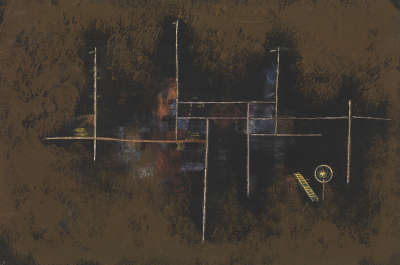
Sigmar Polke
(1941-2010)
Ohne Titel (Pavillon Biennale Venedig, 12/30),
1986
Material / Technology / Carrier
Silbergelatinepapier (Unikat)
Dimensions of the object
30,8 x 40,4 cm
Displayed
Not on display
Acquisition
1992 erworben
Stock
Bayerische Staatsgemäldesammlungen - Sammlung Moderne Kunst
in der Pinakothek der Moderne München
Citation
Sigmar Polke, Ohne Titel (Pavillon Biennale Venedig, 12/30), 1986, Bayerische Staatsgemäldesammlungen - Sammlung Moderne Kunst
in der Pinakothek der Moderne München, URL: https://www.sammlung.pinakothek.de/en/artwork/gR4kOjN4Ee (Last updated on 19.06.2023)
You may also be interested in the following works of art: